In-house multi-protocol IIoT data terminal
DIN-rail industrial terminal with isolated RS485, CAN bus and dual Ethernet, plus 4G/wired failover and local flash buffering for zero data loss during network outages.
We combine in-house hardware R&D with industrial software platforms: schematic and multilayer PCB design, embedded firmware, legacy PLC connectivity, real-time OEE data acquisition and <15 ms edge AI visual inspection built for the factory floor.
Core Capabilities
Industrial control schematics, multilayer PCB layout, STM32/ARM/FPGA firmware and pilot builds meeting -40°C to +85°C temperature ranges and Level-4 EMC/ESD standards.
Non-intrusive data collection from Siemens, Mitsubishi and Omron PLCs, drives and CNCs over Modbus RTU/TCP, OPC UA (IEC 62541) and MQTT.
Captures real-time cycle time, first-pass yield (FPY) and downtime reasons, computes OEE automatically, and syncs bidirectionally with MES and ERP.
Quantized vision models running on line-side edge boxes judge surface and solder defects in <15 ms per frame with ≥99.4% recall—without uploading images to the cloud.
End-to-end digitization of production scheduling, barcode work-order reporting, unit-level quality traceability and preventive maintenance checks.
Interactive Demonstration
Production Implementations
DIN-rail industrial terminal with isolated RS485, CAN bus and dual Ethernet, plus 4G/wired failover and local flash buffering for zero data loss during network outages.
Real-time visualization of machine utilization, yield and OEE trends, pushing unplanned downtime alerts to maintenance engineers within 5 seconds.
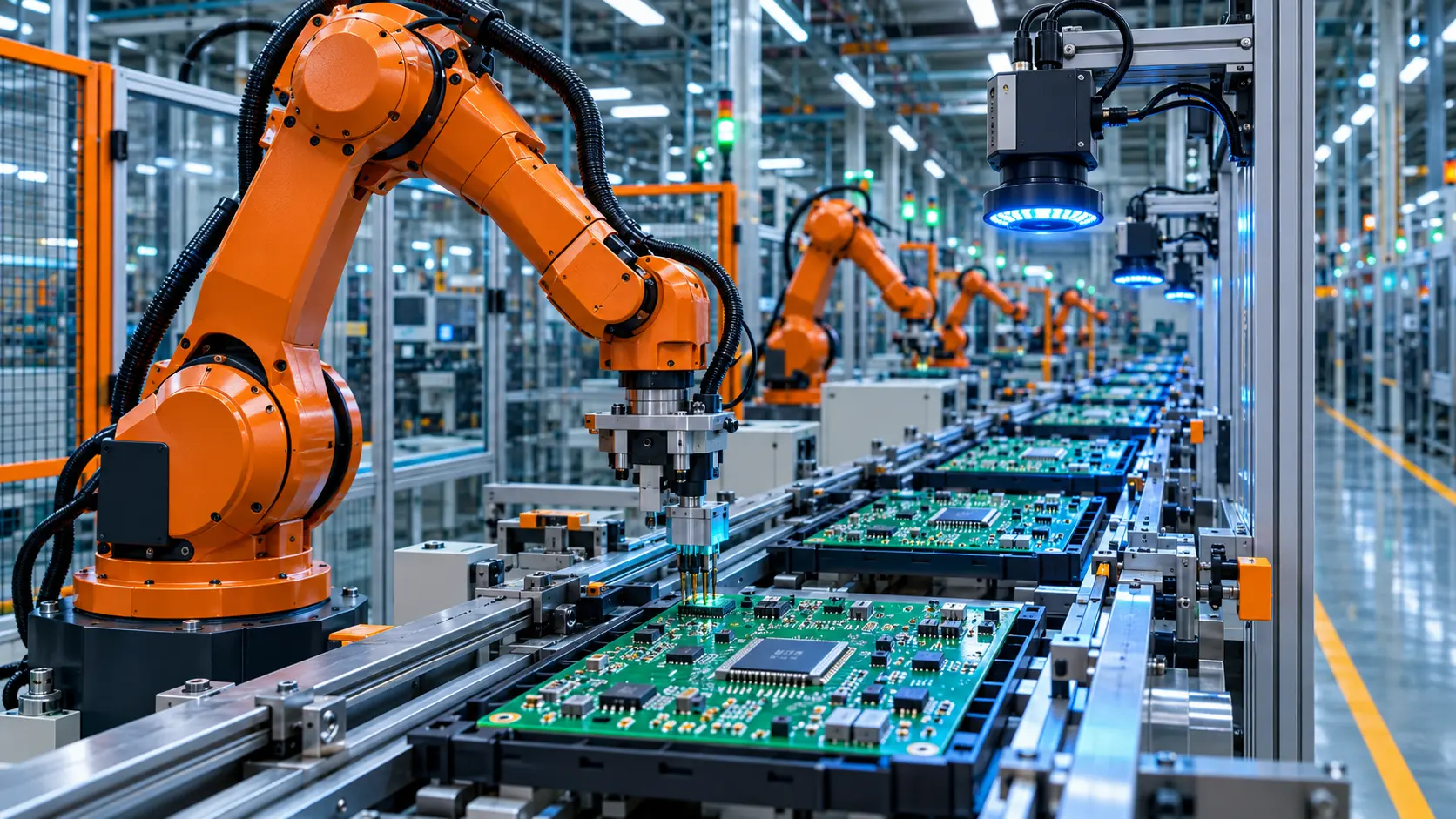
Inline optical inspection for PCB solder joints, injection-molded flash and metal scratches, triggering pneumatic ejection in milliseconds and linking images to batch IDs.
Industry Deployment FAQ
We use a non-intrusive retrofit approach: for PLCs with serial or Ethernet ports, our edge gateway translates Modbus, OPC UA, Siemens S7, and Mitsubishi MC protocols; for closed legacy machines, we attach external CT current clamps, optical counters, vibration sensors, or screen-reading cameras without altering the machine’s safety wiring.
Using our industrial defect pre-trained backbone and synthetic defect augmentation, only 30–100 real NG images per defect class are typically required to reach production readiness within 1–2 weeks—achieving ≥99.4% recall and <0.5% false-alarm rate at <15 ms inference latency.
Yes. You can engage us for standalone schematic/PCB layout and pilot manufacturing, standalone embedded firmware, standalone shop-floor software, or a turnkey hardware-to-cloud system—with full design files and source code handed over.